Brick-Tastic Recommendations
Ready to Discover More? Builds Picked Especially for You!



The Creation of the Battleship Tirpitz
The Tirpitz was the second of two Bismarck-class battleships built for Kriegsmarine. Named after Grand Admiral Alfred von Tirpitz, the ship was launched on April 1, 1939, and completed in February 1941. She was a powerful vessel, displacing approximately 2,000 tons more than her twin, the Bismarck, and armed with eight 38 cm main guns in four twin turrets. Tirpitz was intended to serve as a deterrent, controlling northern Norwegian waters and securing German interests in the Arctic and Atlantic regions.
"Floating Fortress"
During her service, Tirpitz rarely left the Norwegian fjords, acting as a "floating fortress."
Her presence compelled the Royal Navy to maintain significant forces in northern waters to deter a possible attack by a German battleship. In 1943, the ship participated in the bombardment of Allied positions on Spitzbergen, simultaneously becoming the target of British special operations and numerous air raids.
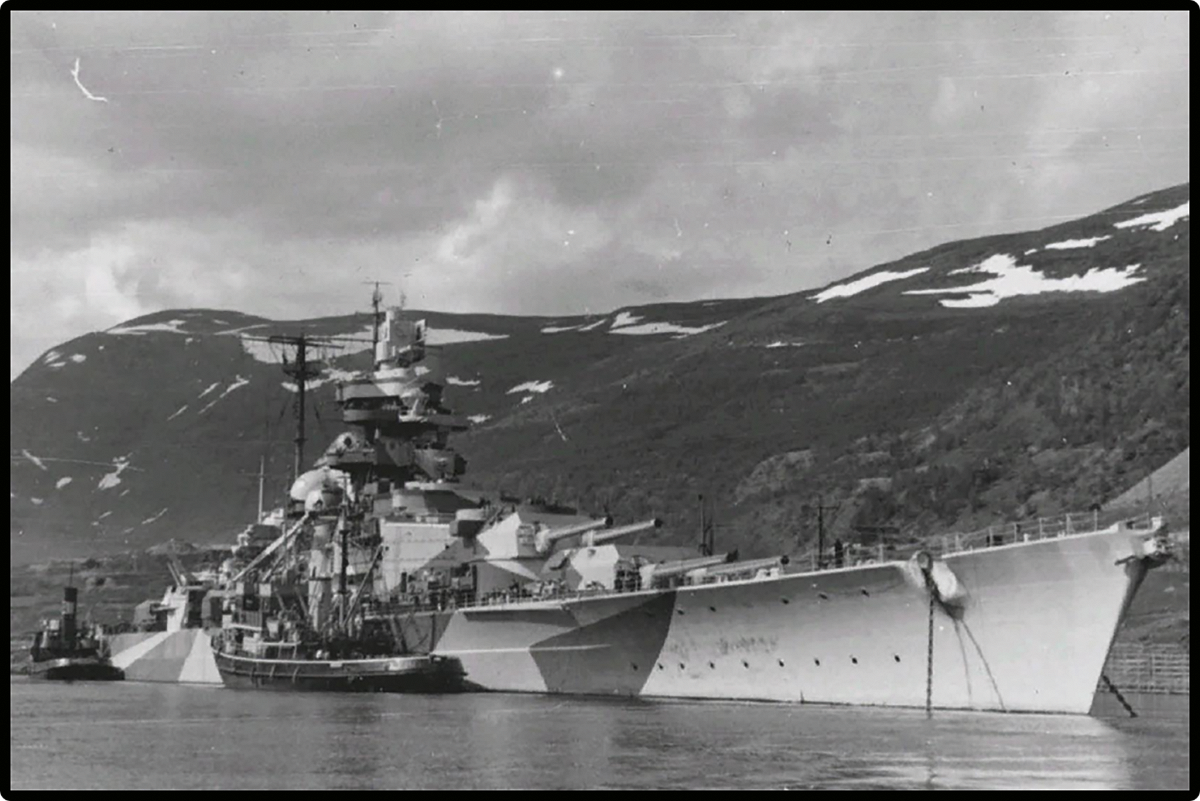
Ultimately, on November 12, 1944, the Tirpitz was sunk by Lancaster bombers using "Tallboy" bombs, ending its history as a symbol of German naval power.
Building this model offers not only the satisfaction of precise assembly but also the opportunity to better understand the history and technology of World War II warships.
The Tirpitz was a German battleship from the Second World War, launched on April 1, 1939. It was the twin ship of the battleship "Bismarck" and the largest unit of the Kriegsmarine from 1941–1944. It reached its combat readiness in September, 1941. It was sunk on November 12, 1944, near the Norwegian Tromsø by the British Air Force.
The ship model created by the COBI company was produced in a scale of 1: 300. It has nearly 2810 elements and is 87 cm long. Thanks to the use of the latest available elements and advanced construction techniques, the model faithfully reflects the proportions of the historic ship and retains all of its essential elements, including the original, very characteristic camouflage. It has numerous moving parts such as propellers, rudders, rotating towers and gun barrels that can be raised and lowered. The set also includes a very stable and aesthetic black display stand with a plate with the name of the ship printed on it. As it is a large and quite complex model, we recommend it mainly to veteran collectors and older, experienced brick fans. It does not require gluing or painting, because its entire hull and all elements consist of COBI construction blocks.


